Polls. The app's first hello back.
For years Cricbuzz talked at its users. Scores, news, video, all one way. Polls became the first feature where the app asks a question, and a few hundred million cricket opinions finally get somewhere to go.
The whole story, at a glance.
Before the deep dive.
Cricbuzz had no way for fans to talk back. We launched opinion polls small, let the numbers earn the investment, found that curated questions outpull automated ones tenfold, solved a stubborn layout problem with progressive disclosure, and ended up with a feature brands now pay to be part of.
Cricket fans argue. It's half the sport.
Rohit versus Virat. Pace versus spin. "Should've bowled first." Every match generates a million opinions, and inside our app they had nowhere to land.
Every competitor had already figured this out. So that's where I started. Not with designs, with homework.
Polls tied to prizes and play-along mechanics. Vote, predict, win things. Heavy infrastructure behind a simple tap.
Right-or-wrong trivia. Tests your cricket brain rather than asking for your cricket heart.
Simple match-based questions. No rewards, no scores. Just a take and a tap.
Here's the thing about launching last. You don't copy the loudest player. Hotstar's prize-driven polls need reward budgets, legal sign-offs, whole systems. You don't start there. You arrive there.
Ship the test. Then perfect the design.
I started by listing every scenario the card had to survive. Short questions, long questions, two options, four options, active polls, expired polls, the results view after voting.
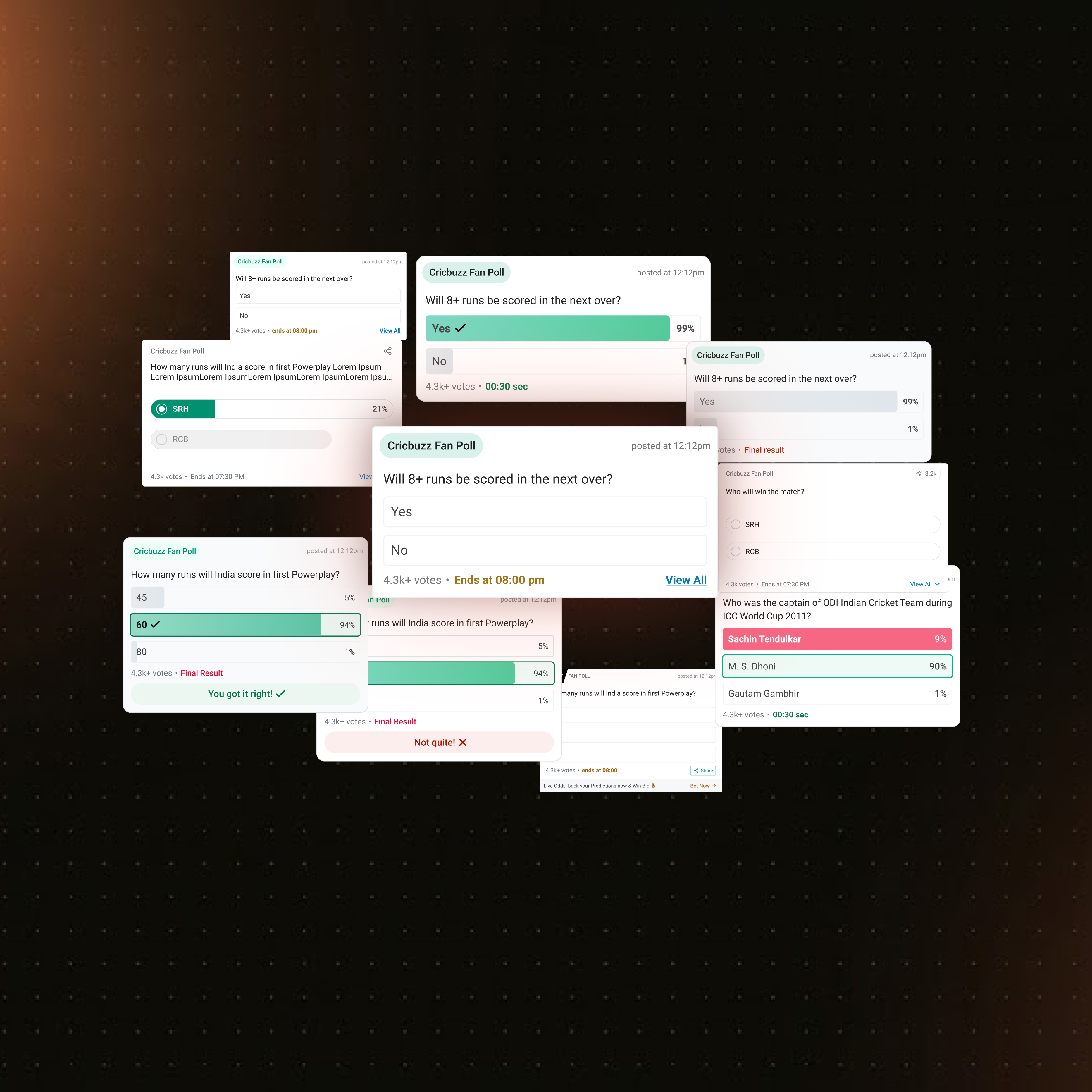
Then we did something slightly unusual. We pushed a clean first version live with one simple question behind it: will people actually tap?
We wired polls to run automated through the IPL, generated for every match with no human touch. Even at that baseline, tens of thousands of votes rolled in daily. Then the IPL Final happened.
That was the green light. We went all in.
The widget stayed. The question changed.
Automated polls proved the pipes worked. But when we started curating polls, with humans writing sharper, spicier questions around India's home series, the same widget turned into a different feature.
On India's ODI home series, curated polls averaged 12.7 lakh votes a day. At peak, a single day crossed 13,73,708 votes. The lesson wrote itself. The poll card is just the stage. The question is the show.
Then we added the share option, because a poll vote is an opinion and no cricket fan in recorded history has kept one to themselves. Automated polls had shared exactly zero times. Curated ones hit 38,000 shares a day, peaking at 39,602. Every one a WhatsApp forward carrying the app somewhere new.
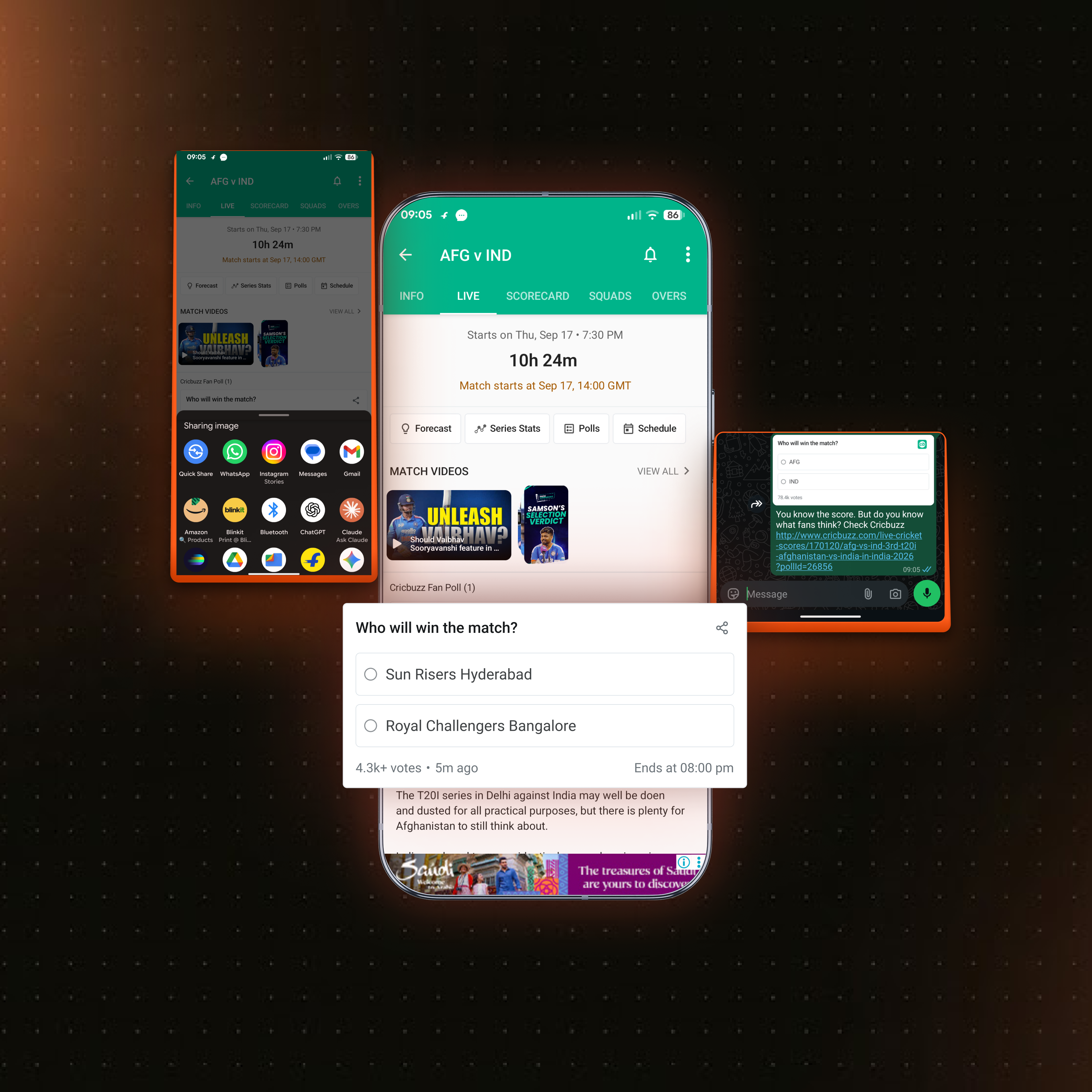
Every card, a different height.
Then came the fun part. And by fun I mean the thing that ate my week.
Polls didn't have their own page. They lived inside a carousel, sharing space with everything else. And polls are shapeshifters. One has two options, the next has four. One question is six words, the next is a paragraph.
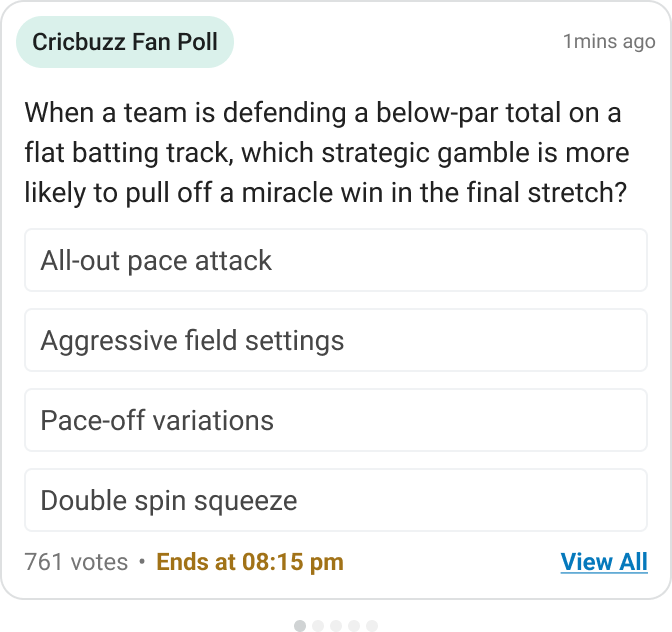
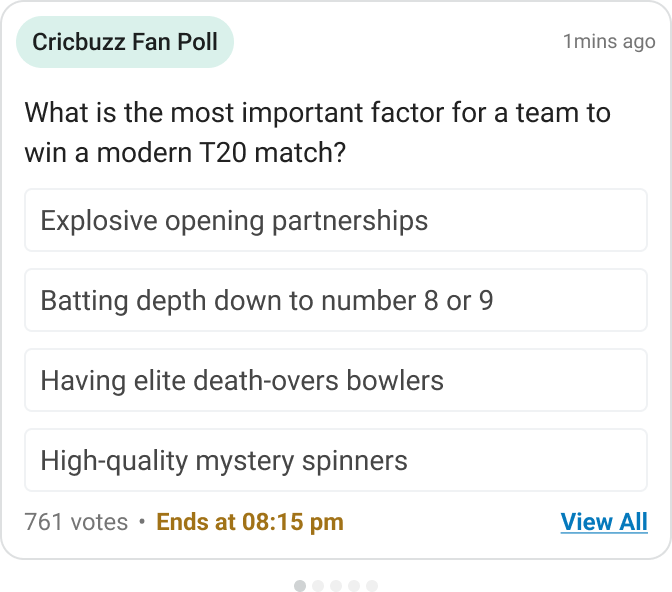
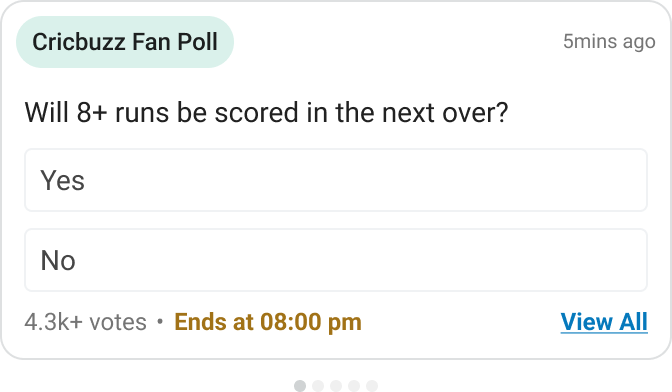
One tall card would stretch the entire row, leaving its neighbours floating in awkward empty space. The UI wasn't broken exactly. It was worse. It was untidy.
We tried everything. Truncate the questions? Now they're unreadable. Cap the options? Now the poll is dishonest. Fix the card height? Now there's a scroll inside a card inside a carousel, a crime. Every fix compromised something we cared about.
Stop adding. Start hiding.
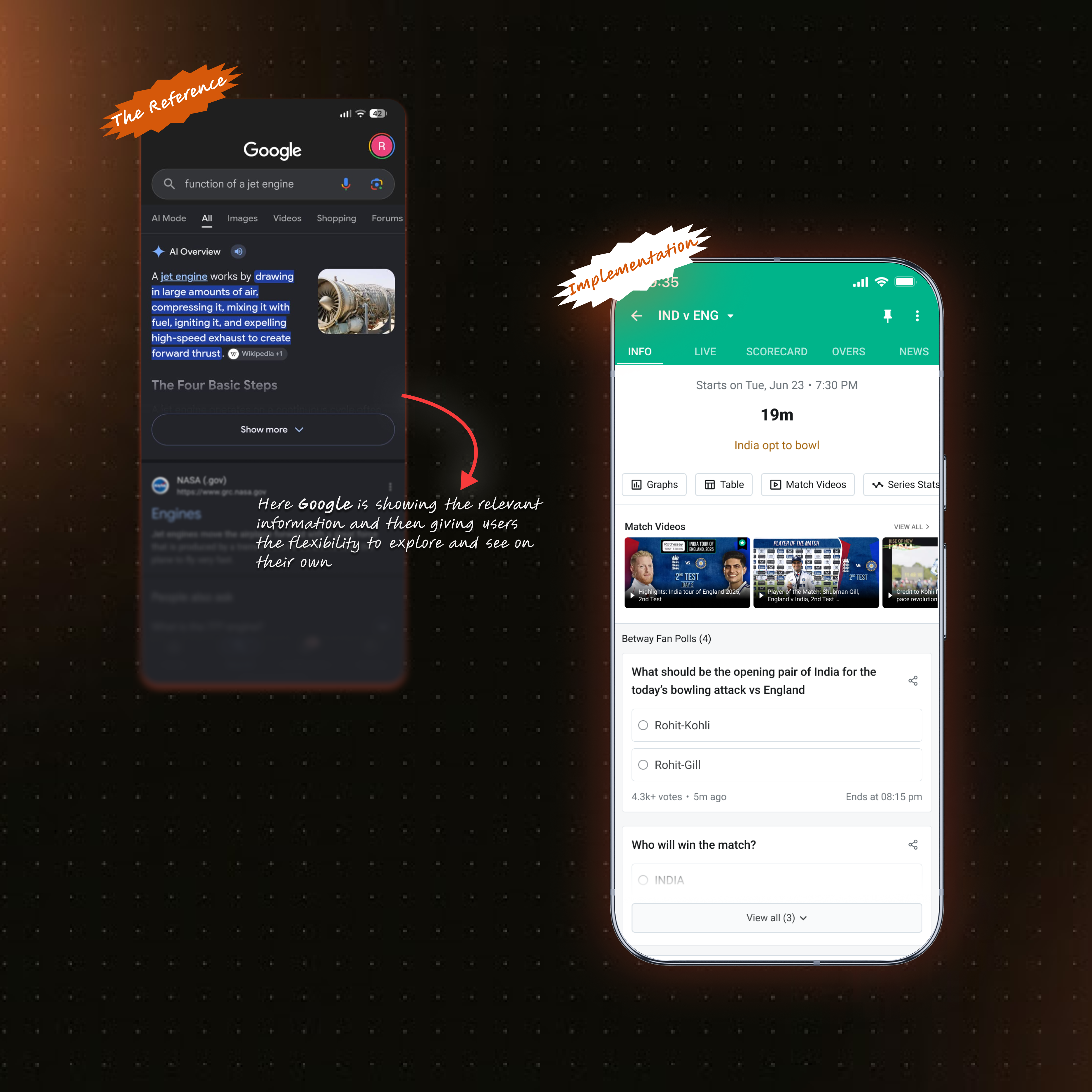
The answer showed up where a lot of good design solutions live, in a random search. Two words. Progressive disclosure. Show a little, promise more, let curiosity do the walking.
Instead of cramming every poll into the carousel, I showed one full poll and half of the next peeking in. Enough to whisper there's more here. Beside it a clean action: Show all, with the count of active polls.
One height. Every poll intact. Nothing truncated, capped, or compromised. The same trick movie trailers have used forever. Show just enough.
From consumption to participation.
Past the numbers, polls changed something about what Cricbuzz is. Every feature before this was consumption. Read, watch, leave. Polls are participation. And a user who participates has a reason to come back that scores alone can't give. What did everyone else say?
And against the competition?
The closest public benchmark is Crex's flagship interactive format, their quiz partnership with Delhi Capitals, publicly reported crossing 100 million impressions across the IPL 2026 season. Our polls crossed that in under a week of match days.
From engagement feature to revenue line.
Here's the part nobody plans for when sketching a poll card. Brands wanted in.
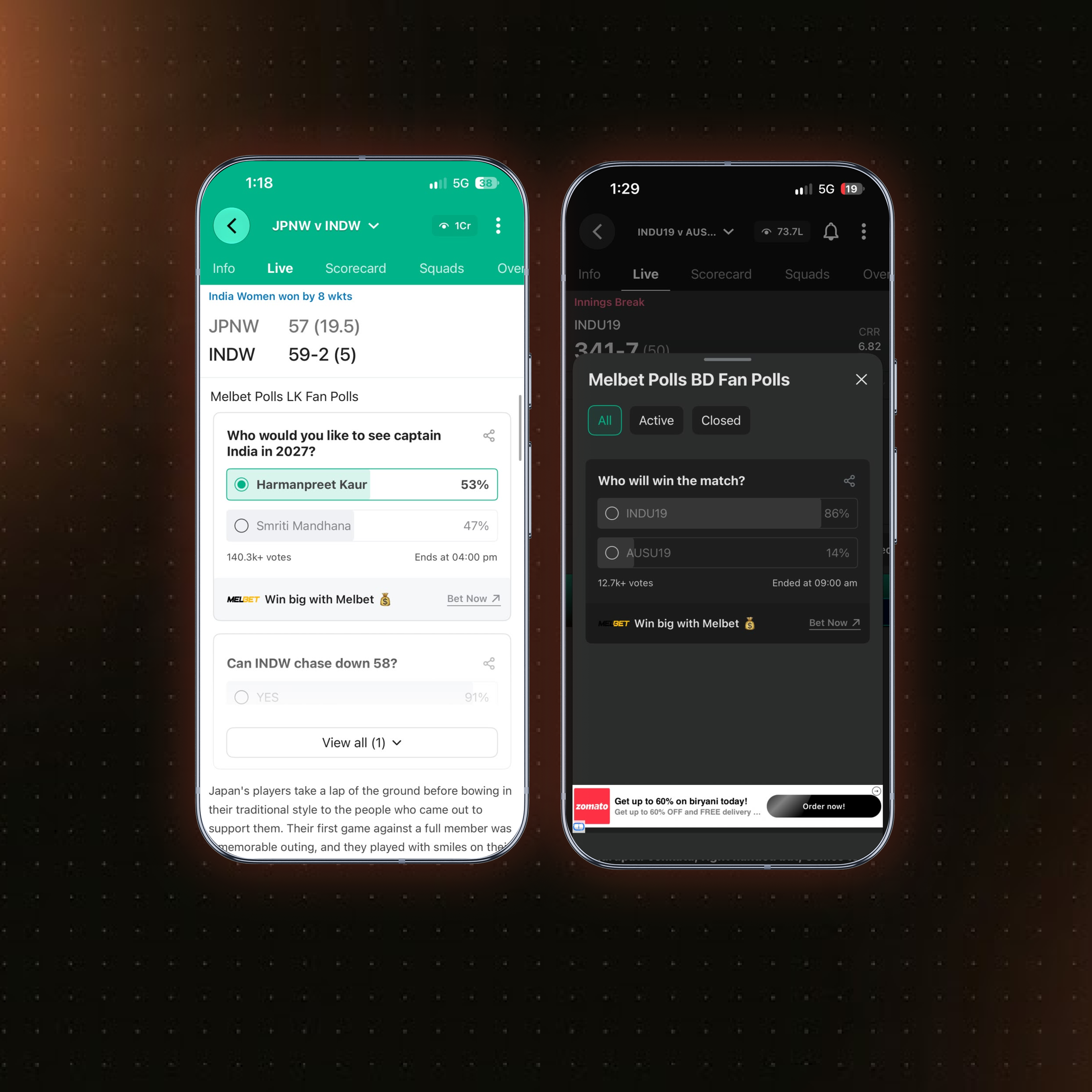
Think about what a poll actually is from an advertiser's side. Millions of fans voluntarily stopping mid-scroll to tap. Not skipping an ad. Not muting one. Choosing to engage. That's the attention every brand is paying for and rarely getting.
So polls became sellable inventory. Brand-sponsored polls now run as collaborations, a brand's name on the question fans were going to answer anyway. The feature that started as an engagement bet is now a revenue-generating asset, funding its own roadmap.
And that roadmap is where this goes from feature to platform.
Pure takes, zero friction. Proven at 13.7 lakh votes a day, monetized through brand collaborations.
Right-or-wrong, choose-the-correct, prediction formats. Turning opinions into games of cricket knowledge.
Streaks, points, benefits for voting. The Hotstar-style layer we deliberately skipped at launch, arriving with an audience already trained to vote.
Remember the launch decision, don't start with gamification, arrive there? This is the arrival plan. Except now it isn't a bet. It's a feature with revenue, retention data, and 55 crore impressions negotiating on its behalf.
Show less. Ask better.
Start with the smallest version of the idea that can prove itself. The numbers vote first, users follow. A curated question outpulled automation ten times over with the exact same widget. When a layout problem refuses every clever fix, stop adding and start hiding. And if you build the thing fans genuinely want to touch, the business model shows up on its own. Brands will pay to stand where the attention already is.